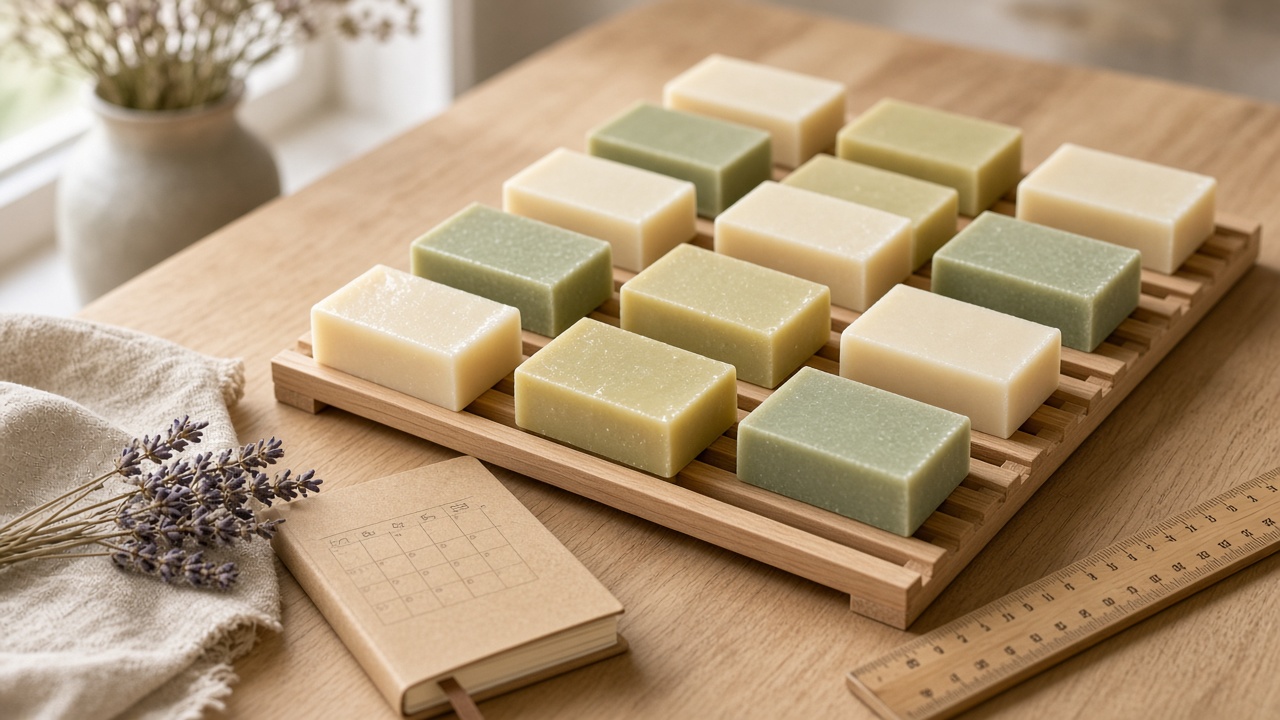
How Long Does Soap Need to Cure?
You have unmolded your soap, cut it into bars, and everything looks good.
Now comes one of the hardest parts of cold process soap making:
Waiting.
A common recommendation is to cure handmade soap for 4–6 weeks, and that is a reasonable guideline for many cold process recipes. But it is not a universal rule.
Some soaps may perform well after four weeks. Others become noticeably better after six, eight, or even twelve weeks. Certain formulations, particularly high-olive-oil soaps such as traditional Castile-style recipes, can continue improving for many months.
So how long does soap actually need to cure?
The answer depends on what you mean by cured, the soap-making process you used, the amount of water in the recipe, the oils and fatty acids present, the size of the bars, and the characteristics you want from the finished soap.
What Does It Mean to Cure Soap?
Soap curing is the period after a freshly made bar is unmolded and cut during which the soap continues to lose excess water and develop its finished physical characteristics.
During cure, several things can happen:
- Water gradually evaporates from the bar
- The soap becomes harder
- The bar can last longer during use
- Lather characteristics may improve
- The internal crystalline structure of the soap continues developing
- The overall feel of the bar can become milder and more refined
Curing is therefore more than simply waiting for the soap to become safe enough to touch.
A properly formulated cold process soap usually completes the majority of its saponification relatively early in the process, while curing continues for weeks afterward.
That distinction is important.
Is Soap Still Saponifying During the Cure?
Saponification begins as soon as the oils and lye solution are combined.
A substantial portion of that reaction normally occurs during the first hours and days after the batch is made.
Depending on the formulation, temperature, gel phase, and process used, most of the sodium hydroxide may be consumed well before the traditional 4–6 week cure period has finished.
But that does not mean the soap is fully cured.
The following two concepts are different:
- Saponification: the chemical reaction that converts fats and alkali into soap.
- Curing: the longer period in which water evaporates and the physical structure and performance of the bar continue developing.
A bar can therefore be largely or fully saponified while still benefiting significantly from additional cure time.
How Long Should Cold Process Soap Cure?
For many standard cold process soap recipes, 4–6 weeks is a practical starting range.
During that period, the soap has time to:
- Lose a meaningful amount of water
- Become harder
- Last longer in the shower
- Develop more stable lather
- Finish maturing as a bar
However, recipes vary considerably.
A balanced recipe containing a mixture of hard and liquid oils may be excellent after four to six weeks.
A softer, high-oleic formula may benefit from a much longer cure.
This is why it is better to think in terms of a minimum practical cure period plus evaluation of the actual bar, rather than treating exactly 28 days as a magic deadline.
Why Do Soap Makers Usually Say 4–6 Weeks?
The 4–6 week recommendation works well because it provides enough time for many common soap recipes to develop noticeably better hardness and longevity.
Freshly cut soap often contains a substantial amount of water.
As that water evaporates, the bar becomes denser.
A harder, drier bar generally dissolves more slowly in use, which means it can last longer.
Soap used too early may still work, but it may:
- Feel softer
- Dissolve more quickly
- Become mushy more easily
- Produce lather that differs from the mature bar
- Have a shorter usable life
The cure period allows the recipe to become closer to the product the soap maker actually intended to create.
Does Soap Become Milder as It Cures?
Soap makers often describe cured soap as becoming milder with age.
There is some truth behind that observation, but the explanation is more complicated than simply saying that lye slowly disappears for six weeks.
In a correctly formulated soap, saponification should consume the appropriate amount of alkali relatively early.
Continued curing allows:
- Moisture loss
- Structural changes within the soap
- Changes in solubility
- Development of the bar's lather and physical feel
These changes can affect how the soap feels during use.
A properly formulated recipe is therefore important from the beginning.
Cure time should never be used as a way to correct a recipe that contains too much lye.
If you are unsure about the amount of lye in a formulation, review How Much Lye Do I Need for Soap? and recalculate the original recipe.
Does Cure Time Make Lye-Heavy Soap Safe?
No.
This is one of the most important distinctions to understand.
A soap that contains excess unreacted lye because the recipe was incorrectly formulated does not necessarily become safe simply because it sits on a shelf for six weeks.
Curing is not a substitute for correct calculations.
Possible causes of a lye-heavy batch include:
- Incorrect SAP values
- Too much lye
- Missing oils
- Incorrect measurements
- Accidental unit conversion
- Incorrect lye purity assumptions
- Recipe entry errors
If you have reason to believe a batch contains excess alkali, investigate the formulation rather than assuming time will fix it.
SoapMetrics can help you verify the soap and lye calculation before making a batch.
How Long Does Hot Process Soap Need to Cure?
Hot process soap is somewhat different.
Because the soap is actively cooked, saponification is intentionally accelerated during production.
For that reason, hot process soap may become usable sooner than cold process soap.
However, usable is not the same as fully cured.
Hot process soap still contains water.
Allowing it to cure can improve:
- Hardness
- Longevity
- Lather
- Overall bar quality
Many soap makers still give hot process bars several weeks of cure time, even though the saponification process is much further along immediately after cooking.
If you make soap commercially, rushing a hot process bar directly from the mold to the customer may produce a softer and shorter-lasting product than allowing it time to dry and mature.
How Long Does Castile Soap Need to Cure?
Traditional Castile soap is one of the best examples of why 4–6 weeks is not a universal rule.
A true Castile-style soap made predominantly or entirely from olive oil can benefit from a much longer cure period.
Many soap makers allow high-olive-oil soaps to cure for:
- 3 months
- 6 months
- 9 months
- 12 months or longer
Why?
High-oleic soaps tend to behave differently from recipes containing higher percentages of hard or highly saturated fats.
Fresh Castile soap can feel softer and may produce a different style of lather.
With extended curing, the bar can become:
- Considerably harder
- Longer lasting
- More pleasant in use
- More refined in its lather
This does not mean every olive-oil-containing recipe requires a year.
A recipe containing 30% olive oil is very different from one containing 100%.
The entire formulation matters.
How Do the Oils in a Recipe Affect Cure Time?
Every soap recipe contains a different fatty-acid profile.
Common fatty acids in soap include:
- Lauric acid
- Myristic acid
- Palmitic acid
- Stearic acid
- Ricinoleic acid
- Oleic acid
- Linoleic acid
- Linolenic acid
Recipes containing substantial amounts of fats rich in palmitic and stearic acids often produce harder bars relatively quickly.
Examples may include:
- Palm oil
- Tallow
- Lard
- Shea butter
- Cocoa butter
Recipes high in oleic acid, such as those containing large amounts of olive oil or high-oleic liquid oils, can remain softer for longer and may benefit more noticeably from extended curing.
That is one reason SoapMetrics provides fatty-acid information when you formulate a recipe.
You can review your recipe's fatty-acid profile in SoapMetrics before making the batch.
Does Coconut Oil Cure Faster?
Coconut oil creates a relatively hard soap and contains high levels of lauric and myristic fatty acids.
A soap containing significant coconut oil may become physically hard quite quickly.
But hardness does not automatically mean the entire recipe has finished benefiting from cure.
Even a hard bar can still contain substantial water.
The remaining oils in the recipe, superfat, water content, bar size, and environmental conditions still affect the finished product.
So although coconut-oil-rich soap may unmold and harden relatively quickly, it can still benefit from a proper cure period.
Does Superfat Affect Cure Time?
Superfat changes the amount of lye used relative to the oils in the recipe.
A higher superfat leaves more unsaponified fatty material in the finished formulation.
Although superfat can influence the overall behavior and characteristics of a soap, it should not be used by itself to determine cure time.
A 5% superfat does not automatically mean “cure for five weeks,” nor does a higher superfat automatically require a specific number of additional days.
Superfat, oil composition, water content, and environmental conditions all interact.
If you want a deeper explanation of what the setting means, see What Is Superfat in Soap Making?.
Does the Amount of Water Affect Cure Time?
Yes.
Water is one of the largest factors affecting how quickly a soap bar becomes firm and dry.
A recipe using more water generally has more moisture that must eventually evaporate.
That can contribute to:
- Longer drying time
- Softer freshly cut bars
- More weight loss during cure
- Slower development of final hardness
A recipe made with a higher lye concentration and therefore less water may become firm sooner.
However, reducing water is not something that should be done randomly just to make soap cure faster.
Water level also affects:
- Trace
- Working time
- Temperature
- Gel phase
- Pouring behavior
- Design flexibility
- Unmolding
Your water calculation should suit the recipe and process.
The SoapMetrics Help guide explains the water and lye settings available in the calculator.
Does Gel Phase Affect Cure Time?
Gel phase occurs when soap becomes sufficiently warm after pouring that it enters a translucent, gel-like stage.
Gel can accelerate saponification and may affect:
- Color
- Appearance
- Initial hardness
- How quickly the soap seems ready to unmold
However, a gelled soap can still benefit from normal curing.
Again:
Fast saponification does not eliminate water evaporation.
A gelled soap may seem much more finished after the first day or two, but curing still improves the physical qualities of the bar.
How Long Should Soap Stay in the Mold?
Mold time and cure time are separate.
Many cold process soaps can be unmolded in approximately 18–48 hours, but this varies significantly.
Some recipes may need:
- Less than 24 hours
- 2–3 days
- Several days
Factors include:
- Recipe hardness
- Water content
- Sodium lactate or other additives
- Mold type
- Temperature
- Gel phase
- Superfat
- Oil composition
A soap being firm enough to unmold does not mean it is cured.
Once unmolded and cut, the bars generally begin the longer curing process.
Where Should Soap Cure?
Soap should be cured in an environment that allows air to circulate around the bars.
A good curing area is generally:
- Cool to moderate in temperature
- Dry
- Away from direct sunlight
- Well ventilated
- Protected from excessive humidity
- Protected from contamination
- Away from children and pets
Place bars with space between them so air can move around multiple surfaces.
Soap can be cured on:
- Purpose-built soap curing racks
- Shelving
- Suitable plastic-coated racks
- Breathable trays
- Other clean surfaces that allow airflow
Avoid tightly packing freshly cut bars against each other.
Should You Turn Soap While It Cures?
Turning soap periodically can help expose different surfaces to airflow.
It is not absolutely necessary in every setup, particularly if the curing rack already allows excellent airflow around the bars.
However, many soap makers rotate or turn their bars periodically so that one surface does not remain against the shelf for the entire curing period.
The goal is simply to encourage even drying.
Can Soap Cure in a Closed Container?
Fresh soap generally benefits from airflow.
Placing newly cut bars immediately into an airtight plastic container can trap moisture.
That can slow drying and potentially create an unfavorable storage environment.
Once soap is fully cured, storage requirements may be different.
But during active cure, airflow is generally desirable.
Can Humidity Make Soap Take Longer to Cure?
Yes.
Environmental humidity affects moisture evaporation.
Soap curing in a very humid environment may lose water more slowly than identical soap curing in a dry environment.
This means a soap maker in a humid coastal climate may observe different curing behavior than someone curing the same formula in a very dry climate.
Temperature, airflow, and seasonal changes can also affect the process.
This is another reason that a fixed number of days cannot perfectly describe when every soap is finished curing.
How Can You Tell When Soap Is Cured?
There is no single home test that produces a universal “100% cured” result.
Instead, look at several indicators.
The Bar Has Become Noticeably Harder
Compare the bar to how it felt immediately after cutting.
A properly curing bar usually becomes progressively firmer.
The Weight Has Stabilized
One useful method is to weigh a sample bar periodically.
For example:
- Day 1: 130 g
- Week 1: 121 g
- Week 2: 116 g
- Week 3: 113 g
- Week 4: 111 g
- Week 5: 110 g
- Week 6: 110 g
As water evaporates, weight decreases.
When the weight changes very little between measurements, much of the easily lost water has already evaporated.
This can be a useful way to observe curing progress.
It does not by itself prove that the formula is chemically safe, but it gives you objective information about water loss.
The Bar Performs Well
A mature soap should generally:
- Hold its shape
- Resist becoming excessively mushy
- Produce appropriate lather for the formulation
- Last reasonably well during use
A bar that disappears rapidly in the shower may simply benefit from more cure time.
Does pH Tell You When Soap Is Cured?
Not by itself.
Soap is naturally alkaline.
A pH reading cannot tell you how much water remains in a bar or whether the physical curing process is complete.
Likewise, simply waiting for a certain pH number is not an appropriate substitute for correct recipe formulation.
If the question is whether excess lye was used, the first step should be reviewing the actual recipe and measurements.
Can I Use Soap Before 4 Weeks?
A correctly formulated cold process soap may be largely saponified before four weeks have passed.
But that does not necessarily mean using it early is the best choice.
An early bar may be:
- Softer
- Less durable
- More soluble
- Different in lather
- Less representative of the mature recipe
If you are testing a batch, using a small sample earlier can sometimes help you observe how the recipe changes during cure.
For your normal finished product, however, allowing an appropriate cure usually produces a better bar.
Can I Sell Soap Before It Is Fully Cured?
From a product-quality standpoint, I would avoid establishing a production schedule that depends on selling cold process soap immediately after unmolding.
A customer is buying the finished product, not simply a chemically reacted batch.
If the soap still contains significantly more water than it will after curing:
- The bar may weigh less later than when packaged
- It may be softer
- It may have poorer longevity
- The customer's experience may differ from what you intended
For commercial soap makers, curing should therefore be treated as a normal part of the production timeline.
This is where batch tracking becomes especially useful.
SoapMetrics Premium includes tools for recording pour, unmold, and cure information so you can track soap batches and cure dates rather than relying on memory.
Does Soap Lose Weight While Curing?
Yes.
Most of that loss is water.
This is especially important if you sell soap by weight.
A bar weighing 5 ounces immediately after cutting may weigh considerably less several weeks later.
Therefore, commercial soap makers should understand the difference between:
- Fresh cut weight
- Finished cured weight
before choosing bar sizes and printed net-weight declarations.
Your labels should represent the product appropriately under the regulations that apply where you sell.
Does Longer Cure Always Mean Better Soap?
Not indefinitely.
Many soaps continue improving beyond the minimum cure period, but there is eventually a point where additional aging produces diminishing returns.
A standard balanced cold process bar may be excellent at six or eight weeks.
Waiting a full year may not produce a dramatic improvement.
A high-olive-oil soap, on the other hand, may show a much larger difference between six weeks and six months.
The recipe should determine the decision.
A Practical Soap Cure-Time Guide
These ranges are useful starting points rather than absolute rules:
| Soap Type | Typical Starting Cure Range |
|---|---|
| Standard cold process bar soap | 4–6 weeks |
| High hard-fat cold process soap | Around 4–6 weeks |
| High-olive-oil soap | 6–12+ weeks |
| Traditional Castile-style soap | Several months, often 6–12+ |
| Hot process soap | Often usable sooner, but several weeks of cure can improve it |
| High-water soap recipes | May benefit from additional cure time |
The actual formula always matters more than the table.
Why Cure Time Matters for Soap Businesses
For someone making one batch at home, waiting six weeks may simply require patience.
For a soap business, cure time becomes part of production planning.
If you plan to sell 100 bars next month, those bars may need to be manufactured weeks in advance.
You also have to account for:
- Manufacturing date
- Unmolding
- Cutting
- Curing
- Packaging
- Labeling
- Inventory
- Restocking
- Seasonal products
This means soap curing creates a natural delay between production and sellable inventory.
Proper batch records make that much easier to manage.
What Happens If Soap Cures Too Long?
Normally, allowing a properly formulated bar to cure beyond its minimum period is not a problem.
Many soaps improve with additional age.
However, finished soap should still be stored properly.
Long-term exposure to:
- Excessive humidity
- Heat
- Direct sunlight
- Poor airflow
- Oxidizing conditions
can affect quality.
Oils prone to oxidation may also contribute to rancidity or dreaded orange spots (DOS), depending on the formulation and storage conditions.
So curing longer does not mean storage conditions stop mattering.
The Simple Answer: How Long Does Soap Need to Cure?
For most cold process soap, start with approximately 4–6 weeks.
But that is a guideline, not a universal deadline.
Some formulas can benefit from:
6–8 weeks
while high-olive-oil or Castile-style soaps may improve for:
3, 6, 12 months or even longer.
The real goal of curing is not simply reaching a date on the calendar.
You are allowing the soap to lose excess water, become harder, last longer, and develop the characteristics of the finished formulation.
Pay attention to the recipe, oil composition, water content, environmental conditions, bar hardness, and weight loss instead of relying exclusively on a fixed number of days.
And remember that curing cannot correct an incorrectly calculated or lye-heavy recipe. Always verify your formulation before making the batch, handle NaOH or KOH carefully while the soap is being made, and allow the finished bars enough time to become the product you actually want someone to use.
If you are building a new formulation, start with the SoapMetrics soap and lye calculator to verify the recipe, review the fatty-acid profile, and understand the formulation before beginning your next batch.